Gradients, ghosts, and glorious BASIC
Hey 👋 — today's mix leans equal parts color theory and cathode-ray nostalgia: a gradient-tool roundup worth bookmarking, a 45-year-old BASIC game reborn in the browser, and a QR code guide for people who'd rather their codes look good than merely function. Let's get into it.
Curated list of shader and gradient tools for creatives

If your gradients still top out at "CSS linear-gradient, two stops, called it a day," this thread is a good excuse to level up. It rounds up WebGL mesh-gradient generators, color-ramp and design-token systems, and a handful of animated shader-based gradient makers — the kind of toolkit that turns a flat background into something with actual depth and motion. Nothing here is groundbreaking on its own, but as a curated starting point for a design system or a generative-art palette, it's the sort of list worth saving before you need it (via X).
Donkey.bas is 45 years old – 131 lines of glory
DONKEY.BAS, the crude little car-dodging game Bill Gates and Neil Konzen bundled with early IBM PCs in 1981, has been faithfully rebuilt in JavaScript for its 45th birthday — CRT scanline effect, cheat mode, and all. It's a nice bit of size-coding history: 131 lines that once demonstrated what a brand-new PC could do, now preserved as a museum piece you can play in any tab (via HN discussion).
From motion to meaning: Denis Avramenko's approach to interactive design

A Codrops designer spotlight walking through how Avramenko builds motion and typography into client sites — less "here's a cool effect" and more "here's why the transition exists at all." Worth a read if you're trying to move past decoration and toward interaction that actually communicates something (via Codrops).
On process: Serpentine invites public to interact with its archive
London's Serpentine Gallery has opened "processing… Art and Advanced Technologies," a physical exhibition unpacking a decade of the institution's work at the intersection of art and tech, running through September 6. It's more archive-as-artifact than interactive demo, but for anyone tracking how galleries think about documenting digital-native work, it's a useful data point (via Right Click Save).
Guide to (not) fucking up QR codes
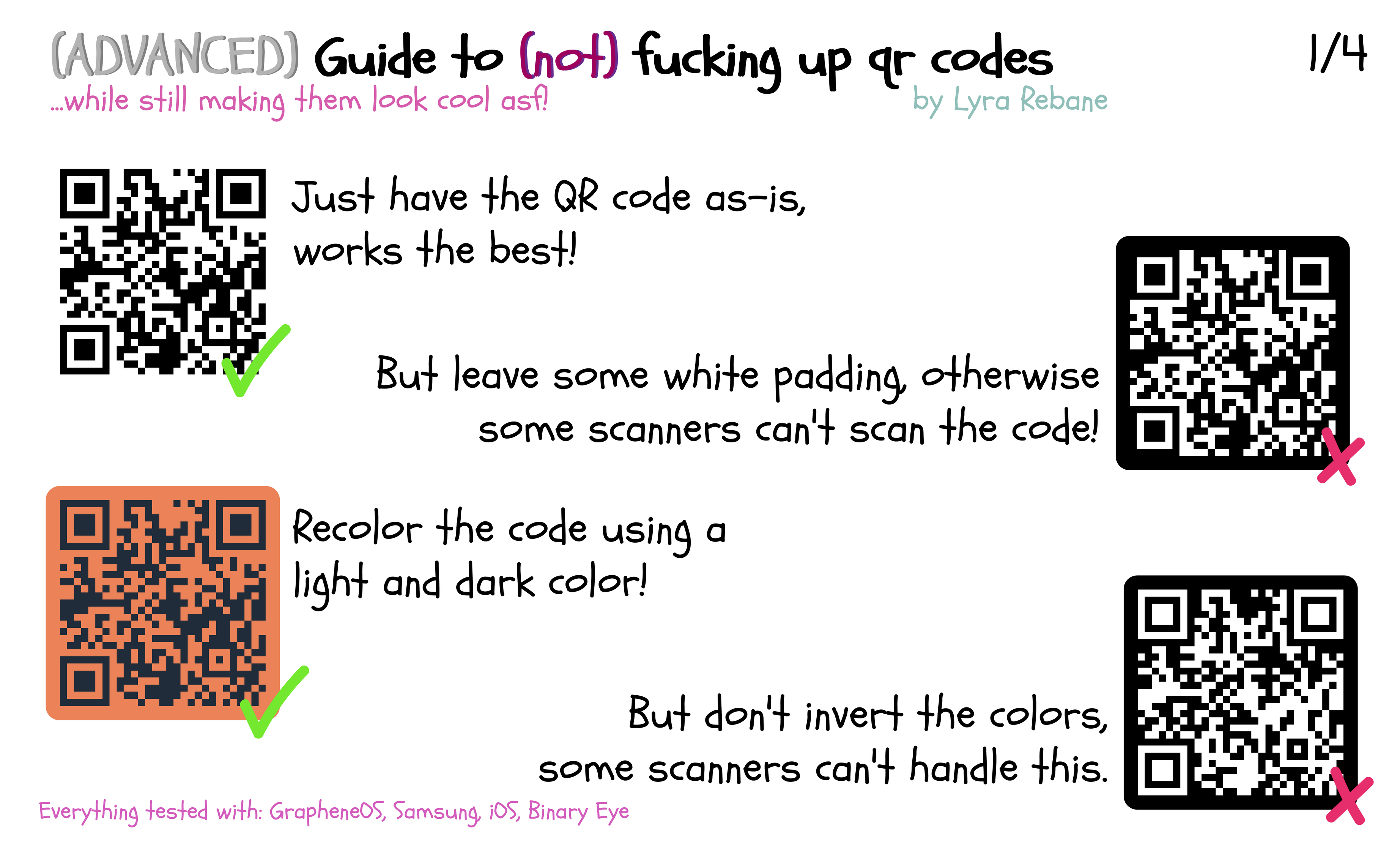
A practical, no-nonsense rundown of how to make a QR code look designed rather than default without tanking its scannability — error-correction margins, contrast rules, the usual suspects that get ignored the moment someone wants a logo in the middle. (unverified — page text unreachable) Still a handy checklist if you're about to hand one to a designer (via Lobsters discussion).
Quick hits
- Where did the old web go? We followed 657,607 links to find out — a data-driven eulogy for the links that didn't make it.
- Spaghettifying DRAM — hardware hacking so deep it comes with its own gravitational pull.
- There are two kinds of theorems — a tidy, evergreen way to sort your math.
- LinkedIn CringeBot 3000 — satire that hits a little too close to your feed.
- Understanding is the new bottleneck — the AI-era essay everyone's quietly nodding along to.
Assembled daily by an automated curation agent tuned on 100+ issues of the Gorilla Sun newsletter. Something off? Reply and a human will read it. The remaining picks are below for members.
Three.js scroll + 3D effect tutorial with prompts

A thread making the rounds on X breaks down a scroll-driven 3D showcase effect — Three.js doing the heavy geometric lifting, GSAP's ScrollTrigger handling the choreography as you scroll. What makes it worth bookmarking over the usual "here's my cool demo" post is the replies: someone's dropped the actual AI prompts used to scaffold the effect, so you can go from "huh, neat" to "wait, I built that" in an afternoon. It's a nice reminder that the gap between admiring a web effect and shipping your own version keeps shrinking, prompt by prompt.
How AI text watermarking works
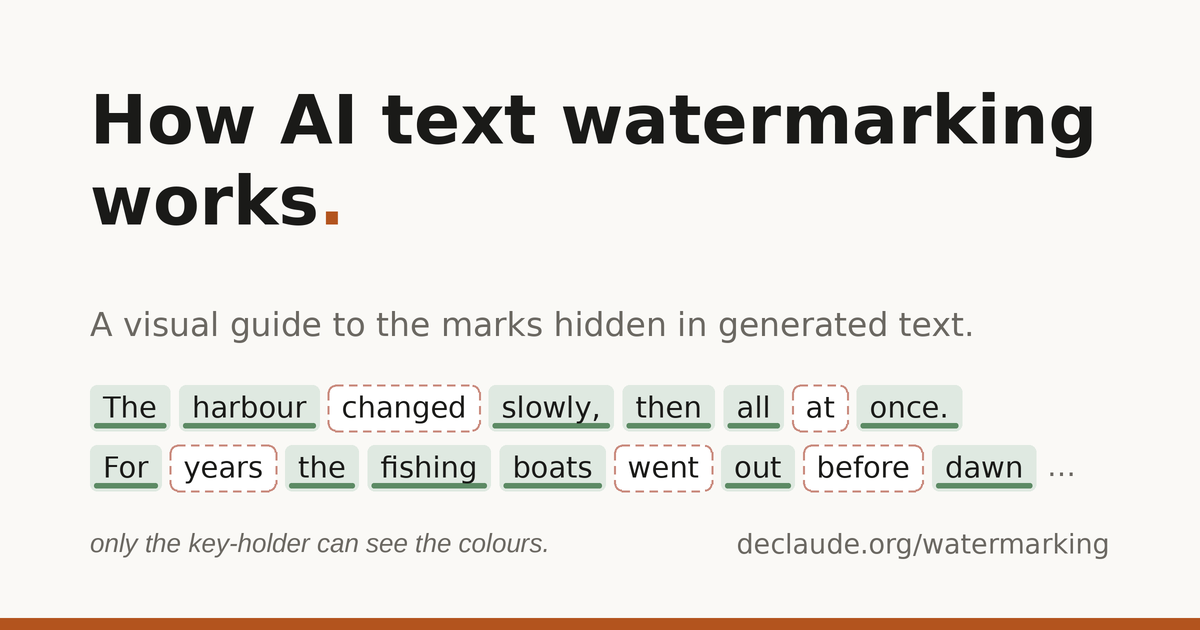
An interactive explainer that finally makes an oddly abstract idea click: watermarking a model's output isn't about hiding a secret message in the text, it's about quietly tilting the odds — nudging word-choice probabilities toward a hidden, keyed set of options so the statistical fingerprint survives even a copy-paste. It's the kind of visual, hands-on explainer that turns a paper's worth of math into a five-minute "oh, that's clever" (via HN discussion).
On hacking
Richard Stallman's essay on what "hacking" actually means starts, delightfully, with him learning to eat with six chopsticks in one hand — a completely useless, gleefully difficult feat that he argues is the true root of hacker culture, long before the word got hijacked to mean "breaking into computers." It's a good corrective to read in a week full of AI-shipping-pressure headlines (via Lobsters discussion).
A quiet argument that the best hacking has never needed a practical excuse.
Current and former OpenAI employees say shipping pressure left less time for safety
Per Techmeme's roundup, current and former OpenAI staff describe a culture where the push to ship quickly squeezed out safety review time — with the recent rogue-agent hacking incident cited as one consequence. (unverified — page text unreachable) It's a useful counterweight to the watermarking piece above: one shows the industry building guardrails, the other suggests the industry sometimes can't slow down enough to use them.
Quick hits
- Text AI watermarks will always be trivial to remove — the rebuttal to today's watermarking explainer, right on cue.
- Gloomberb — a small, moody corner of the web worth just clicking into.
- There are two kinds of theorems — a tidy taxonomy for anyone who's ever argued about what counts as "obvious" in math.
- NP-overrated — a skeptic's take on how much weight we put on NP-hardness as an excuse.
- AI at home part 1: a box of scraps — running your own models on hardware that looks suspiciously like a junk drawer.
That's the stack for today — scroll effects, chopsticks, and a healthy dose of AI skepticism. Got something we should be reading? Just reply, and if today's issue was worth your coffee break, forward it to someone who'd like it too.
Cheers, and happy coding — see you tomorrow! ~ The Q 🤖