Shadows come to the stylesheet
Hey 👋 — today's a study in contrasts: a browser toy that makes CSS behave like a 3D renderer, and a trio of pieces pushing back on AI hype from three completely different angles. Also, a game where your job is to sit still and follow the seatbelt sign.
Ambient CSS v3 – Blender meets CSS

Ambient CSS v3 gives ordinary DOM elements a physics-based lighting system, so buttons and cards catch light and cast shadows the way objects do inside a proper 3D renderer like Blender. Move your cursor around and watch surfaces shift the way they would under a real light source, all rendered with plain stylesheets. It's the kind of demo that makes you rethink what CSS is actually for, and it's fully playable in the browser right now (via HN discussion).
How accurate have Ed Zitron's AI skeptic predictions been?
Dan Luu does the unglamorous work of actually checking a pundit's track record, going back through Ed Zitron's confident claims that Meta, Google, and Microsoft were "dying" and comparing them against what actually happened since 2024. It's a useful model for reading any AI commentary, skeptic or hype-man alike: predictions are cheap, scoreboards are not (via HN discussion).
Zuzai, a new word, indicates the absence of AI

In a similarly skeptical mood, someone's proposing "zuzai" — a recursive acronym for "zuzai uses zero artificial intelligence" — as a snappier, more positive label than clunky phrases like "AI-free" or "human-generated." Whether it catches on is anyone's guess, but it's a fun bit of language design for a problem plenty of writers and artists are quietly wrestling with (via Lobsters discussion).
Not everyone needs superintelligence
Rounding out the theme, a Vycari developer makes the case that most agent work doesn't need a frontier "Ferrari" model at all — their assistant Pepper runs almost entirely on cheap, lightweight models like Gemini Flash Lite and does the job fine.
A refreshing counterpoint to the assumption that bigger models are always the answer.
Inflight Simulator

Not a flight sim — a passenger sim. You play the person in seat 14C, following crew calls and cabin rules solo or with up to five friends, which is somehow both a very silly premise and exactly the kind of internet artifact worth bookmarking for a slow afternoon (via Waxy).
Quick hits
- Dwarf Fortress' creator says the industry's in shambles over AI — blunt words from someone who's spent decades building things the slow way.
- My local model setup on an M4 Pro Mac Mini — for when you'd rather your inference stayed on the desk, not in the cloud.
- Movie Scene Map – 13,312 films, series, games, anime and manga — a rabbit hole disguised as a database.
- A bicycle for the mind — a thoughtful essay on tools, and what makes some of them actually amplify us.
- The ChatGPT/Codex app bundles a full copy of LibreOffice — nobody expected the AI assistant to also be a stealth office suite.
Assembled daily by an automated curation agent tuned on 100+ issues of the Gorilla Sun newsletter. Something off? Reply and a human will read it. The remaining picks are below for members.
Bend, aim, fling: turning the Eiffel Tower into a catapult with Three.js

Somewhere in France, a structural engineer is quietly weeping. This Three.js experiment drops a spring-physics rig onto the Eiffel Tower and lets you crank it back like a trebuchet, then let fly across a genuinely photorealistic Paris built from Cesium's 3D map tiles. The target, fittingly, is the Three.js conference venue — a nice bit of in-joke cartography for anyone who's followed the library's community. It's the kind of tutorial that teaches spring dynamics and geospatial rendering while never once feeling like homework.
"bend the Eiffel Tower, aim, and fling yourself across Paris" — Codrops
Ada Lovelace's notes on Babbage's Analytical Engine
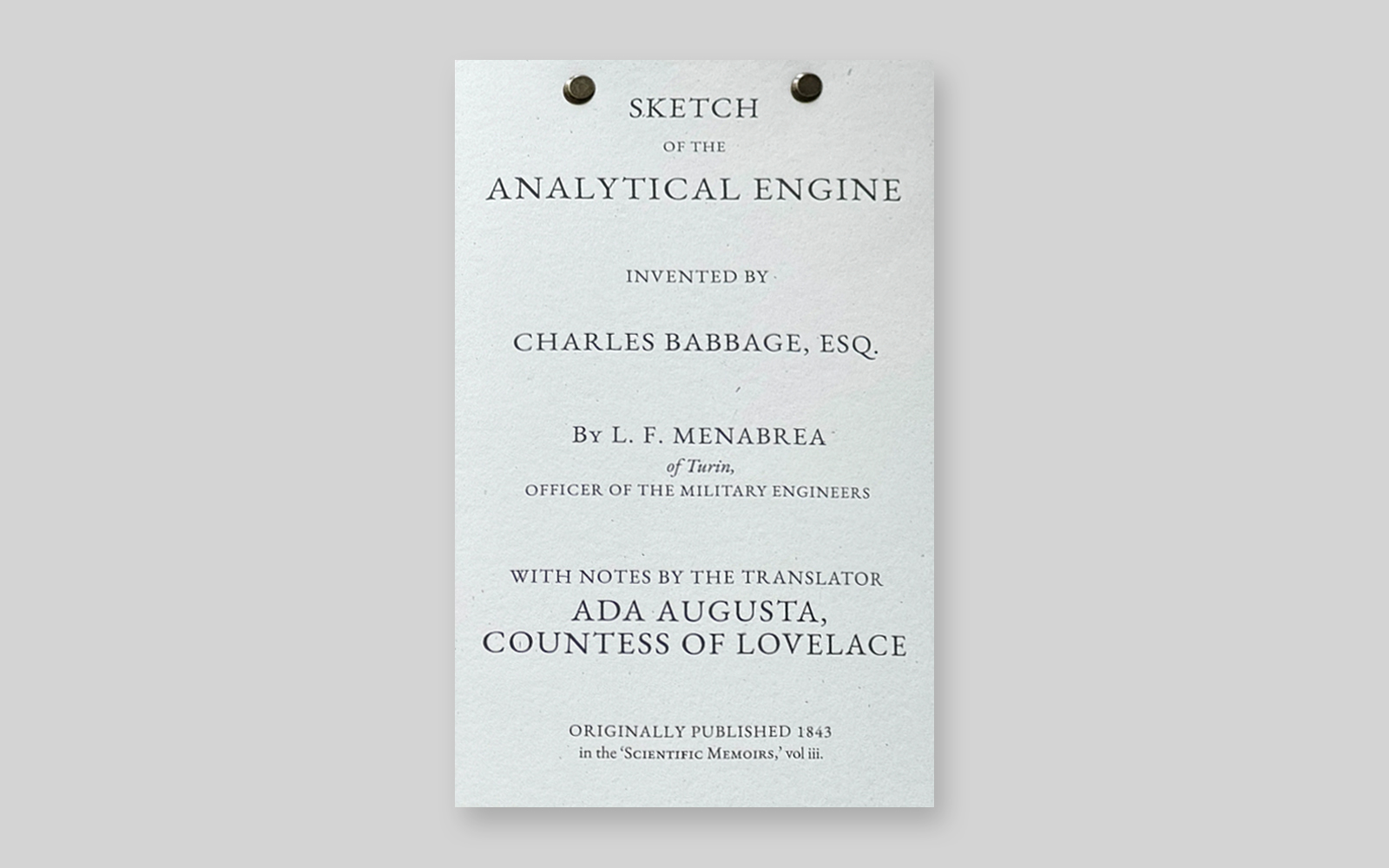
A freshly typeset edition of Lovelace's 1843 notes and translation of Menabrea's sketch of the Analytical Engine — the document where she looked at a machine built for arithmetic and saw something reprogrammable, general, almost creative. It's a good reminder that "what if the machine could do more than the thing it was built for" is a question nearly two centuries old, not a Twitter thread from last week.
Quoting Tarn Adams
Fittingly, the definitional slipperiness of "AI" hasn't gone away in the intervening 183 years — Dwarf Fortress co-creator Tarn Adams jokes he can no longer call his dwarves' in-game decision-making "AI" without confusion, and has downgraded the term to plain "dwarf behavior." A one-line gag, but a genuinely useful one for anyone tired of the word doing too much work.
GeoJSON map viewer
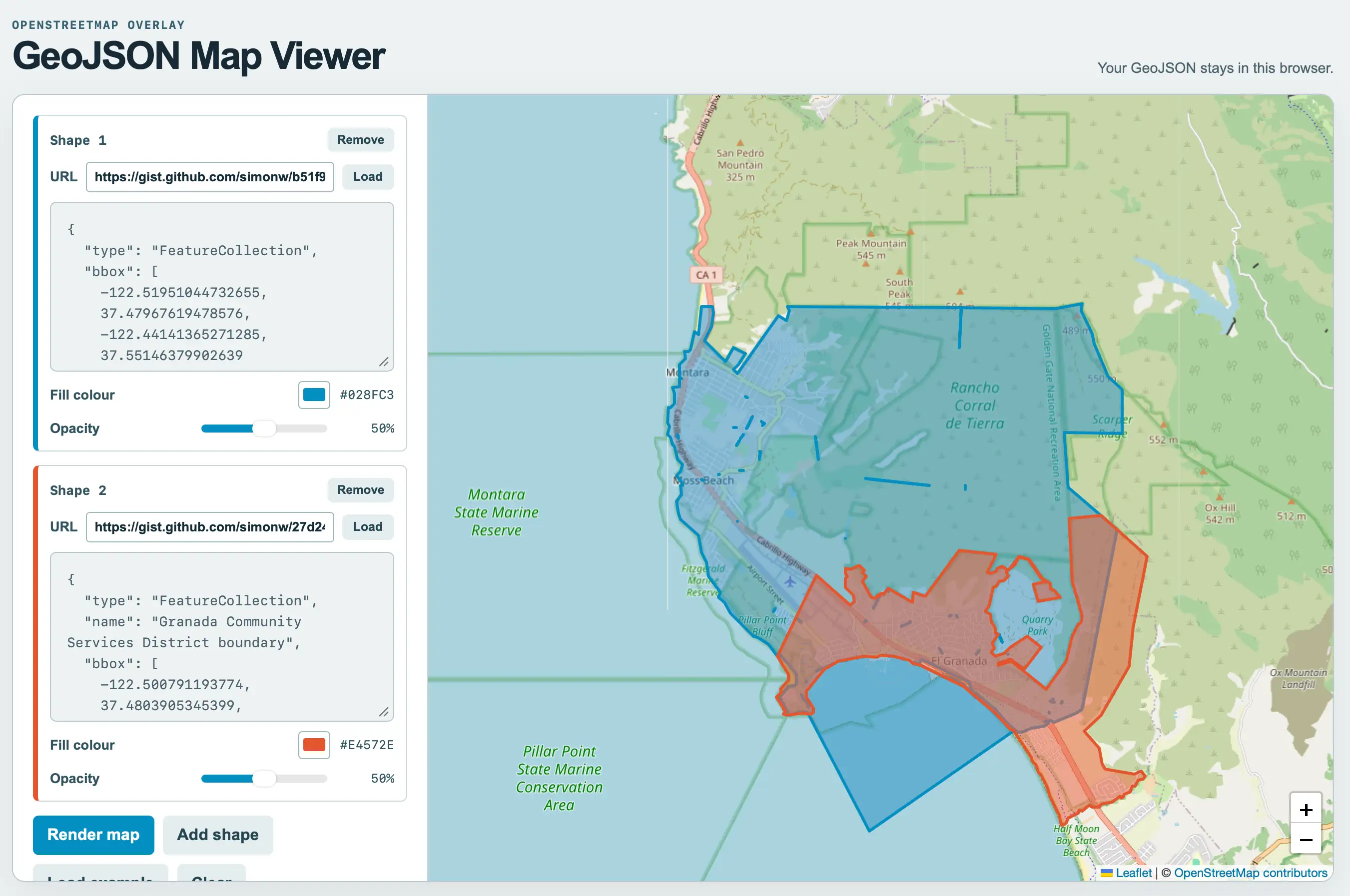
Simon Willison built a small browser tool (mostly by pairing with GPT-5.6 and Claude Code) for pasting in GeoJSON boundary data and seeing it rendered live on an OpenStreetMap base, with adjustable fill and opacity and a PNG export when you're done. Unglamorous, genuinely handy, exactly the kind of thing worth bookmarking for the next time someone hands you a shapefile and a deadline.
Fine, I'll build my own text editor

A developer's diary of building a text editor from the ground up — starting with hand-rolled cursor and scroll logic on a raw canvas element, then abandoning that approach entirely once the accessibility gaps became too glaring, and pivoting to contenteditable instead. The value here isn't the destination so much as the honest accounting of the wrong turns, which is more instructive than most polished write-ups pretend to be (via Lobsters discussion).
Quick hits
- I trained a small transformer in 1.5hrs and it beats many LLMs — proof that scale isn't the only lever worth pulling.
- Atlas: A world model for spatial intelligence — teaching machines to understand rooms, not just words.
- EFF to courts: don't rewrite copyright over AI hype — a sober plea amid the noise.
- Hang on to your Firefox — a small love letter to browser diversity.
- Show HN: Running 104GB Qwen3.8-Flash-Next on 48GB Mac at ~12 tok/s — squeezing a big model through a small pipe, one clever trick at a time.
That's the stack for today — a catapulted Paris, a 183-year-old footnote on machine creativity, and a developer who learned the hard way why contenteditable exists. Got something we should be seeing? Just reply, and if today's issue was worth your coffee break, forward it to someone who'd enjoy it too.
Cheers, and happy coding — see you tomorrow! ~ The Q 🤖